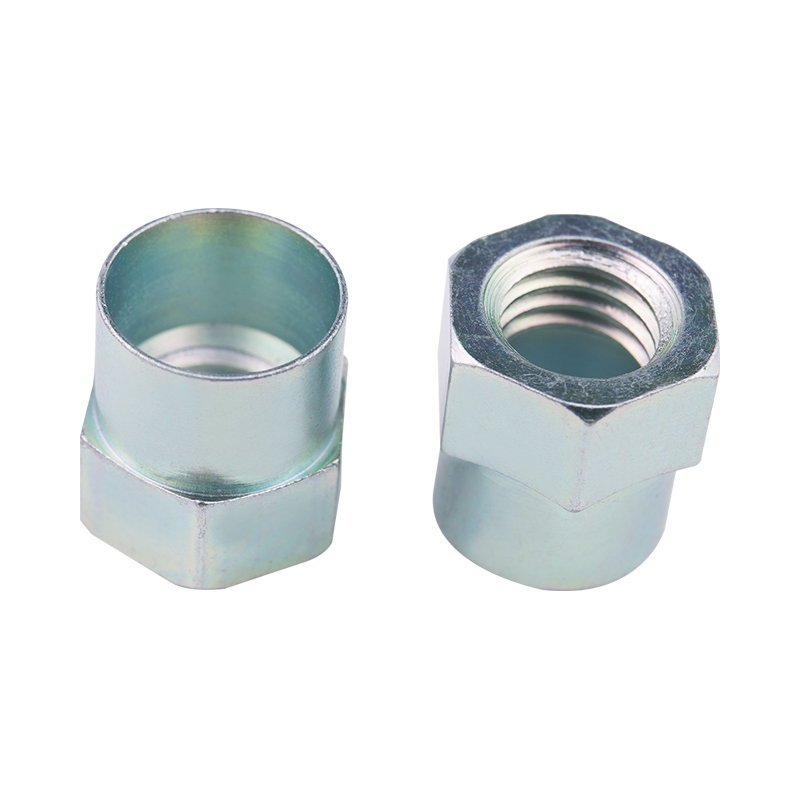
Nuces hexagonales infigendae sunt interne fibulas filatorias ad creandum fortes, onerarias fila in materias tenues vel concavas ubi conventionales percussiones fieri non possunt. Secus infigendus nuces cum corporibus rotundis, hexagonales nuces infixae sunt figurae hexagonis exterioris figurae quae in prae-punctione hexagonali foramine aptat. Haec geometria gyrationis semel inaugurata resistentiam praebet auctam, easque aptas adhibendo ad resistentiam torques vel vibrationis altiorem requirendam.
Structural Design and Key Components
Structura infixae nucis hexagonalis optimized est ad aequilibrium institutionis cum stabilitate mechanica. Unumquodque consilium elementum confert ad functionem functionis functionis suae durante et post institutionem.
Corpus hexagonale
Corpus externum hexagonale notam definitivam huius cinguli est. Cum in congruens hexagonali foramine pressus est, plana nucis latera contra materiam basim mechanice claudunt. Hoc obstat quominus nucem rivet ne inter arctationem vel remotionem fulmine constringat, quae communis est exitus cum nucibus rotundis infixae in summo torque condiciones.
Internum Thread
Filum internum fabricatur ad regulas metricas vel imperatorias, praebens convenientiam cum communibus seris et cochleis. Postquam inauguratus est, filum internum functiones sicut perforatum percussum est, ut conventum repetitum et disconvenientiam sine laesione materiae basin daret.
Deformable Shank Section
Sectio scapus nucis claviculae ordinatur ut per institutionem plastice deformet. Ut axialis vis applicatur, haec sectio concidit et fibulae in posteriora materiae, cum securam machinam mechanicam etiam in institutionibus caecis efficiens, ubi accessus posterioris accedere non potest.
Ut Hexagonal Rivet Nuces Opus Per instruitur
Nuces hexagonales infigendae instituuntur utens processus deformationis moderatae, quae in perpetuum cingulum intra materiam exercitus ancorat. Sequentia institutionis directa est, sed organice definita.
Praeparatio foraminis
Foramen hexagonale creatum est in materia basi utens pulsandi, dissecandi, seu methodi laseris secandi. Foraminis accuratae dimensiones criticae sunt, sicut profano hexagonali arcte congruit corpus nuci claviculi ad effectum anti-gyrationis obtinendum.
Insertio et occasus
Rivet nucis in cavum praeparatum inseritur, et instrumentum institutionis speciale in filo interno trahit dum LABIUM sustinet. Haec actio scapus contra materiae posteriora concidit, fibulae stricta formans. Postquam posito, instrumentum remotum est, inserta staminea permanenti relinquenda.
Eget commoda in Hexagonal Design
Forma sexangulae practicas utilitates praebet in nucibus rotundis, praesertim in ambitibus mechanicis exigendis.
- Melior resistentia gyrationis sub alta tensis torques
- Stabilis obstrictio perficiendi in vibratione prone comitiis
- Simplici filo integritas in tenuibus metallis vel structuris tubulosis
Typical Materias et Superficies treatments
Nuces hexagonales infigendae ex variis materiis fabricatae sunt ut par requisitis mechanicis et environmental diversis. Electio materialis vim influit, corrosio resistentia, et diuturnum effectum.
| Carbon Steel | Conventiones industriales generales, partes structurales |
| Diver | Repugnans ambitus corrosio, armorum velit |
| aluminium | Leve conventus, translationes applicationes |
Communia Applications et Usus Causae
Nuces hexagonales fibulae late adhibentur in applicationibus ubi stamina tuta creari debent in componentibus tenuibus vel clausis-profile. Typical usus casus includunt tabulas autocinetas corporis, clausuras industriales, tabulas machinae, supellectilem metallicam, et repositoria electrica. Facultas eorum staminum ex una parte fabricae praestandi efficacia facit in condicionibus conventus caecis.
Summarium Operis Principiorum
Hexagonales infigendae nuces operantur componendo deformatio mechanica cum anti-rotatione geometrica densis. Corpus hexagonale nere prohibet, dum prostrato scapo secure fibulat basim materiam. Hoc consequitur in filo interno durabili, reusable, qui fideliter in materiis tenuibus, summis aureis conventibus facit, et ambitus ubi aditus ad interiora circumscribitur.